 EN
EN

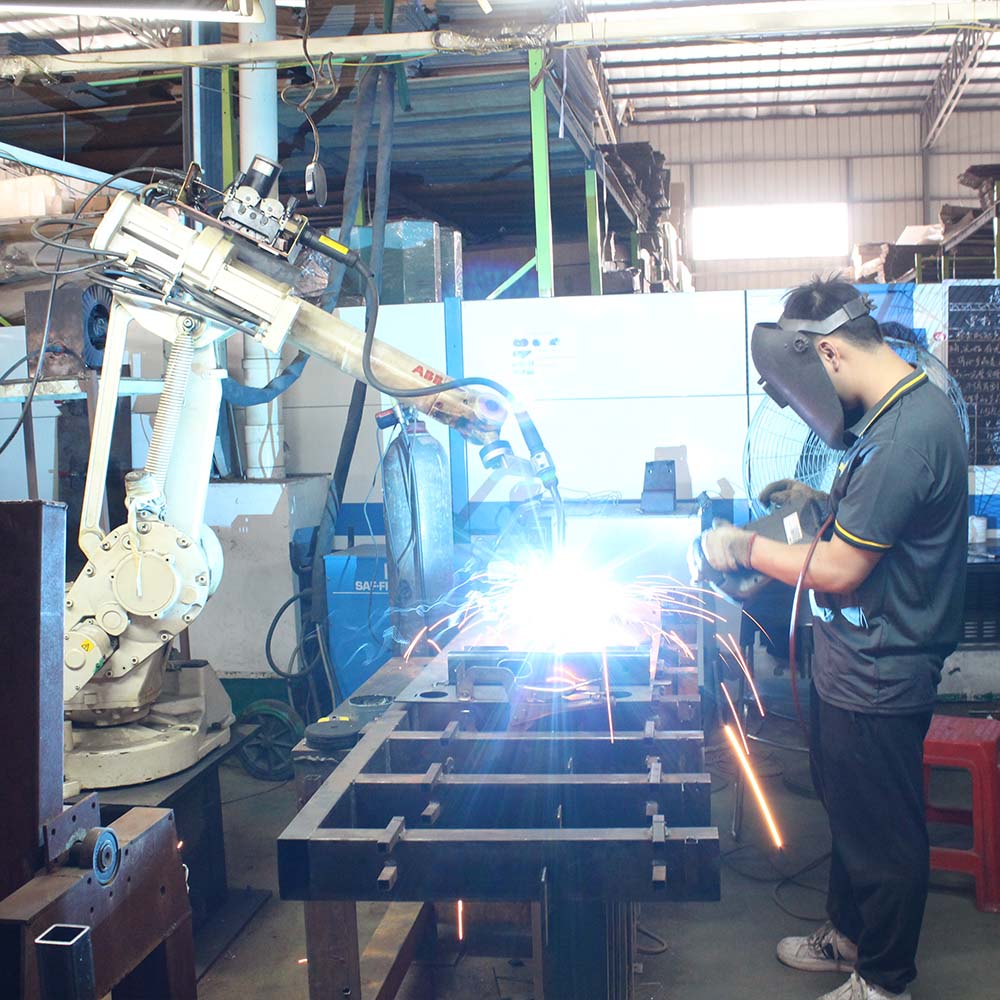
Why Aluminum Behaves Differently Under a TIG Arc
Aluminum welding has a reputation that is partly deserved. The metal pulls heat away from the puddle much faster than carbon steel, and the oxide layer on its surface melts at roughly 2,072 °C while the aluminum beneath it melts near 660 °C. That gap creates the familiar headaches: cold starts, soot, porosity, and a puddle that freezes before the toes wet out. A TIG arc has to break the oxide without burning through the base metal. Aluminum also moves more with heat. Its thermal expansion is around 23.1 µm/m°C, so long seams and thin panels can distort quickly. The process is not impossible. The window is just tighter, and arc behavior matters more.
What High-Frequency AC Actually Changes in the Arc
High-frequency TIG aluminum welding often means two things in practice. One is high-frequency arc starting, which strikes the arc without touching tungsten to work. The other is adjustable AC frequency, commonly from 20 Hz to 300 Hz on modern inverters. With conventional 60 Hz AC, each half cycle lasts longer. The electrode-positive half breaks oxide but loads heat into the tungsten. The electrode-negative half penetrates and cools the tungsten. Raise the frequency, and those halves get shorter. The arc becomes stiffer, narrower, and more directional. That can help on thin material by concentrating heat and shrinking the heat-affected zone. It also narrows the cleaning band. Run too much frequency on dirty or heavily oxidized aluminum, and the edge may stay gray and smutty because the oxide never gets enough electrode-positive time. The benefit is control, not a magic number.
Cleaner Starts and Better Oxide Breaking on Thin Sheet
Thin aluminum sheet exposes every weakness in technique. At 1.5 mm to 3 mm, a clean weld and a blown-through hole can be separated by a few amps or a fraction of a second. High-frequency AC helps because the arc can be focused without a wide, wandering cone. Heat goes into the joint instead of the surrounding panel. During a chemical plant retrofit in southern China, a crew was replacing aluminum cable trays and small instrument enclosures. The existing 60 Hz setup produced sound root beads on thicker brackets, but 2 mm covers showed heavy cleaning marks and distortion. After moving to 180 Hz to 220 Hz AC with a tighter balance setting, the covers held shape better, and the weld toes tied in without the usual gray halo. The change did not rescue bad fit-up. It made the arc easier to place.
| AC frequency | Arc shape | Oxide cleaning | Heat into base metal | Common shop use |
|---|---|---|---|---|
| 60 Hz | Broad and soft | Wide and strong | Higher, spreads outward | Thick plate, rough fits |
| 120 Hz | Balanced | Moderate | Moderate | General fabrication |
| 180-220 Hz | Tight and stable | Focused | Lower and localized | Thin sheet, corners, visible joints |
| 250 Hz+ | Very narrow | Narrow window | Very low with fast travel | Precision thin wall, repair |
Heat Control, Distortion, and Fit-Up in Real Fabrication
Frequency is only one lever. Balance, amperage, travel angle, gas flow, and joint design all interact. Higher AC frequency can reduce overall heat input, but that advantage disappears if travel speed climbs too far. The puddle may look neat while penetration stays shallow. For structural work, AWS D1.2 and ASME BPVC Section IX require qualified procedures and welders, and those qualifications do not care about a display setting. They care about sound fusion, documented variables, and repeatable results. Fit-up is another hard limit. A tight root gap and clean mating surfaces do more for porosity control than any frequency preset. On long aluminum seams, back stepping, balanced tacking, chill bars, and careful clamping often matter as much as the power source. High-frequency TIG can make a good procedure more forgiving. It cannot make a bad procedure good.
Where High-Frequency TIG Aluminum Welding Makes Sense, and Where It Does Not
The strongest case for high-frequency TIG aluminum welding is thin to medium gauge work where appearance, precise heat placement, and repair access matter. Enclosures, frames, tubular assemblies, and visible architectural parts often fit that profile. The process also shines on repair benches, where a focused arc can blend into an existing bead without cooking nearby material. The limits are just as real. On thick sections, preheat and higher current may be needed, and MIG or dual-shield may be more productive. On heavily contaminated castings, the arc cannot replace proper cleaning. Very high frequency can make the puddle feel stiff and reduce wet-out, especially for operators who are used to a softer 60 Hz arc. A shop that switches settings without updating technique may see more lack of fusion, not less. That trade-off should be tested on scrap before production.
Shop Floor Checks Before Chasing Higher Frequency
Before adjusting frequency, verify the basics. 1. Clean the joint with a stainless steel brush dedicated to aluminum, then degrease with acetone or alcohol. 2. Confirm filler alloy and diameter match the base metal and joint. 3. Check tungsten grind, gas lens condition, and flow rate. 4. Set AC balance to enough cleaning without overheating the tungsten. 5. Test frequency on scrap that matches thickness, fit-up, and position. 6. Inspect the first production pieces for penetration, toe wet-out, and cleaning zone width. A notebook with settings and results is more useful than a memory of what worked last month. For buyers sourcing fabricated aluminum parts, the same discipline shows up in process control. Lambert, a precision hardware manufacturer with sheet metal and tubular fabrication capabilities, supports aluminum welding projects through in-house cutting, forming, finishing, and inspection workflows. That kind of integrated shop floor experience helps turn a tricky arc setting into a repeatable production result.
Table of Contents
- Why Aluminum Behaves Differently Under a TIG Arc
- What High-Frequency AC Actually Changes in the Arc
- Cleaner Starts and Better Oxide Breaking on Thin Sheet
- Heat Control, Distortion, and Fit-Up in Real Fabrication
- Where High-Frequency TIG Aluminum Welding Makes Sense, and Where It Does Not
- Shop Floor Checks Before Chasing Higher Frequency