 EN
EN

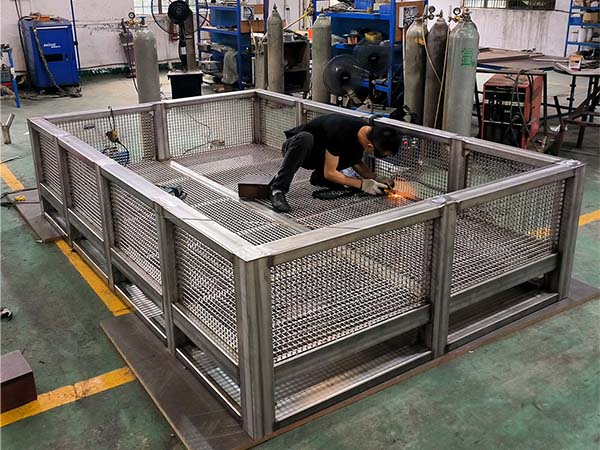
Mixed Metal Fabrication Rarely Fits a Single Welding Process
Mixed metal fabrication looks simple on a drawing until stainless frames meet carbon steel base plates, aluminum brackets bolt to galvanized tubes, or thin-wall tubing ties into heavy structural sections. Every joint has its own thermal personality. A process that runs clean on 6 mm carbon steel can scorch a 1.5 mm stainless tube in seconds. That is why combined TIG and MIG welding services matter. TIG gives the control needed for roots, edges, and visible surfaces. MIG supplies deposition rate and penetration for thicker sections and longer runs. Combined, they cover gaps either process leaves open.
Where TIG Wins on Control and Cleanliness
Tungsten inert gas welding, usually called TIG, uses a non-consumable electrode and a separate filler rod. Heat input can be fine-tuned with a foot pedal or thumb control, so the arc stays stable at low amperage. On stainless steel, that controlled heat helps preserve corrosion resistance by limiting carbide precipitation in the heat-affected zone. On aluminum, alternating current TIG breaks up the oxide layer while allowing a clean puddle. For tube roots and visible joints, TIG often leaves a bead that needs little grinding. The tradeoff is speed. A skilled TIG welder can produce beautiful work, but the process is slower and depends heavily on operator technique. In a mixed metal job, those limits are exactly why MIG is often brought in for the heavy lifting.
Where MIG Delivers Speed and Fill Capacity
Metal inert gas welding, or MIG, feeds a continuous wire electrode through a gun. The wire melts into the puddle, which makes the process fast and easy to semi-automate. On carbon steel, MIG with a proper shielding gas mix can lay down long, consistent beads with good penetration. On thicker plate, the higher deposition rate reduces the number of passes and keeps distortion more manageable when the sequence is planned well. MIG also handles poor fit-up better than TIG because it can fill gaps faster. Without care, MIG can warp thin panels, create spatter, or leave a rougher bead. In mixed metal work, MIG is usually the right choice for structural brackets, base frames, gussets, and long seams that will be painted or powder coated. TIG then steps in for edges, roots, and exposed joints that need a cleaner finish.
A Shop Floor Example from a Chemical Plant Retrofit
A recent retrofit at a chemical plant in southern China showed why the combination matters. The scope included 316L stainless process tubing, carbon steel support frames, and aluminum cable trays. The first plan used MIG for most joints because the schedule was tight. On thin-wall stainless tubing, MIG heat input was too aggressive. Several root passes oxidized, and grinding them out risked thinning the wall. The revised plan used TIG for stainless tube roots and any joint visible after installation. MIG handled carbon steel frames and heavy brackets. Filler selection was separated as well, 316L for the stainless side and ER70S-6 for carbon steel. The crew also changed the welding sequence to balance heat on opposite sides of the assemblies. Rework dropped, and final inspection found fewer surface defects. The lesson was that mixed metal work needs a process map, not a favorite machine.
The Metallurgical and Code Side of Combining Processes
Combining TIG and MIG is not only about speed. It changes how heat moves through the part and how filler dilutes into the base metal. In dissimilar joints, such as stainless to carbon steel, direct fusion can create hard, crack-sensitive phases in the heat-affected zone. A nickel-rich filler or a transition piece may be needed. Aluminum to steel is another story. Direct arc welding is generally not practical because of brittle intermetallic compounds, so mechanical fasteners, bimetallic transition inserts, or solid-state joining methods are often used instead. AWS D1.1 covers structural steel welding, ASME BPVC Section IX addresses procedure and performance qualifications, and ISO 3834 outlines quality requirements for fusion welding. These standards do not pick processes, but they force qualified procedures, controlled consumables, and defined inspection.
| Factor | TIG | MIG |
|---|---|---|
| Heat input control | Very fine, good for thin sections | Moderate to high, needs discipline on thin parts |
| Deposition rate | Lower | Higher |
| Best thickness range | Thin to medium, roots, edges | Medium to thick, long seams |
| Spatter and cleanup | Minimal | Can be higher without tuning |
| Visible bead appearance | Smooth, often grind-free | Functional, may need finishing |
| Typical mixed metal role | Roots, exposed joints, stainless, aluminum | Frames, brackets, gussets, long structural welds |
Planning, Fixturing, and Inspection Keep the Hybrid Approach Honest
A hybrid TIG and MIG plan only works when the shop treats it as a system. Joint design should be decided before cutting starts. Fit-up tolerances need to match the process. If a root will be TIG welded, the gap should be consistent enough for a controlled puddle. If MIG will fill the joint, the groove angle and root face should support proper penetration without excessive wire. Fixtures matter too. Strongbacks and tack sequences can hold alignment while alternating processes add heat in different zones. Inspection should be matched to risk. Visual inspection catches surface issues, while dye penetrant, ultrasonic testing, or radiographic testing may be required for critical joints. Not every mixed metal job needs both processes. A simple carbon steel frame may run faster with MIG only. A thin stainless assembly may be best with TIG only. The combination is essential when the work mixes thickness, material, and finish requirements in the same assembly.
For fabrication teams dealing with that kind of mixed scope, Lambert provides a practical one-stop route. The Zhongshan based operation runs laser cutting, CNC punching and bending, automated tube cutting, multi-radius bending, and both MIG and TIG welding under one ISO certified roof. That setup allows process selection to follow the joint, not the other way around. Lambert supports industrial enclosures, architectural metalwork, and public infrastructure components with R&D, customization, and supply chain coordination. When a project includes stainless, carbon steel, and aluminum in the same build, having both welding processes available keeps the work honest and the rework lower.
Table of Contents
- Mixed Metal Fabrication Rarely Fits a Single Welding Process
- Where TIG Wins on Control and Cleanliness
- Where MIG Delivers Speed and Fill Capacity
- A Shop Floor Example from a Chemical Plant Retrofit
- The Metallurgical and Code Side of Combining Processes
- Planning, Fixturing, and Inspection Keep the Hybrid Approach Honest