EN
EN

A charging cabinet that overheats once is a bad day. A charging cabinet that overheats twice is a fire risk — and a brand liability you can't unsee.
Power bank rental stations, battery charging lockers, and device charging kiosks run 24/7 in malls, convenience stores, transit hubs, and street corners. They generate heat around the clock, sit next to crowds, and get abused by vandals. Yet most operators discover the quality of their enclosure only after a failure: warped doors, misaligned slots, ventilation so poor the batteries throttle — or worse.
Cheap thin-gauge cabinets dent, corrode, and trap heat. Plastic-fronted units yellow, crack, and fail fire-safety expectations entirely. The result: downtime, service calls, and the worst conversation in this business — a battery incident that could have been contained.
Here's the truth: the cabinet is the safety barrier between a charging product and a public space. Get it wrong and everything else — your batteries, your software, your brand — inherits the risk.
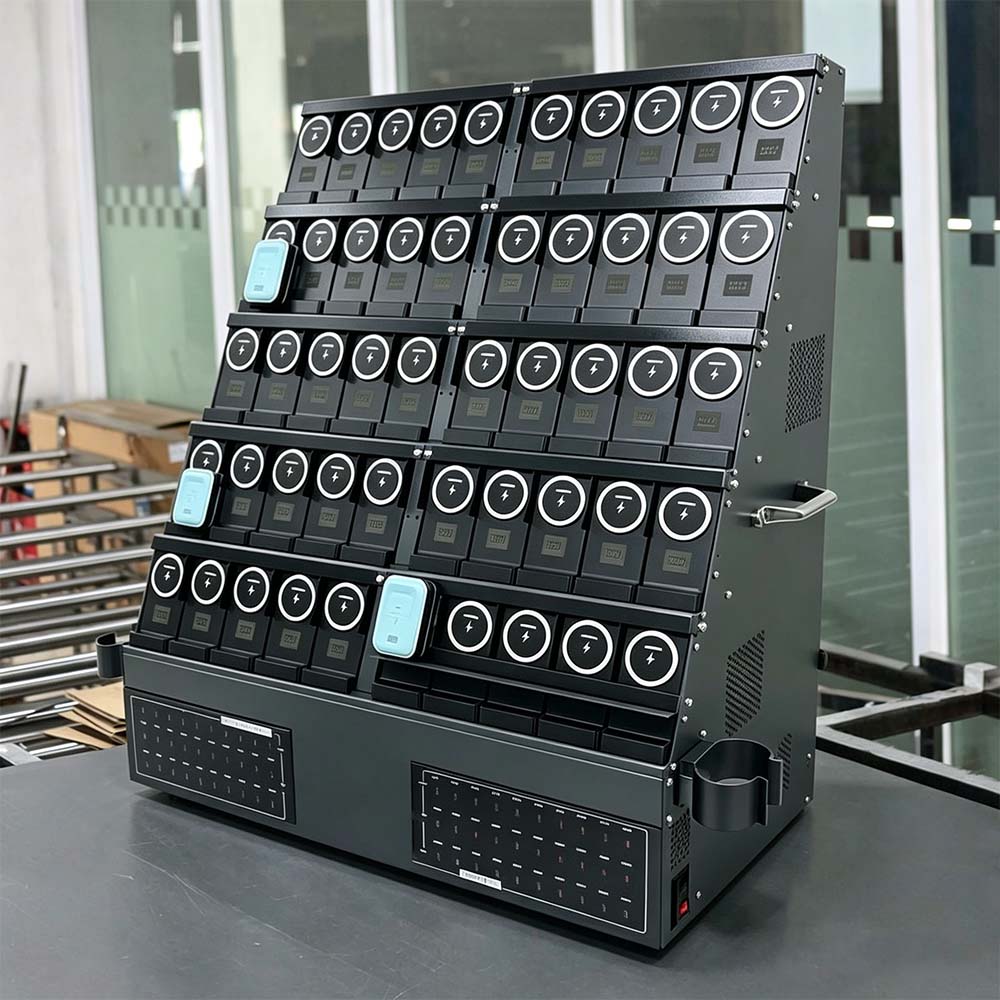
Professional charging station OEMs and power bank operators specify sheet metal fabricated enclosures because charging hardware demands what plastic and thin metal simply can't deliver:
| Factor | Plastic / Thin-Gauge Cabinets | Fabricated Steel Enclosures |
|---|---|---|
| Heat management | Traps heat; batteries throttle & degrade | Ventilation grilles + engineered airflow channels |
| Fire containment | Melts, accelerates spread | Steel fire compartments isolate cells |
| Structural strength | Warps under stacking and impacts | 1.5–2.5 mm steel, tamper and impact resistant |
| Slot precision | Molds drift; slots misalign | Laser-cut openings, ±0.2 mm, identical per slot |
| Weather & corrosion | UV cracks, rust blooms | Powder-coated steel, 10+ years outdoor rating |
| Service life | 3–5 years | 10–15 years with re-coating |
For high-slot-count stations — 20, 40, 50 bays or more — fabrication precision decides whether every slot aligns and every vent works as designed.
Understanding the workflow helps you evaluate suppliers before you commit — not after a field failure.
Every cabinet starts with the electronics: battery compartments, PCBs, cooling fans, LED indicator arrays, and lock solenoids. Our engineers map every slot, mounting boss, and cable route into a 3D model — including ventilation cross-sections sized to your heat load and drainage for outdoor units.
For battery-containing cabinets, steel gauge and fire-compartment design are non-negotiable: the enclosure is your first line of thermal defense.
Fiber lasers cut every slot, vent louver, and cable opening in a single pass with ±0.2 mm tolerance. No burrs that snag a power bank, no drift between units — every bay is dimensionally identical, and every station matches the next one off the line.
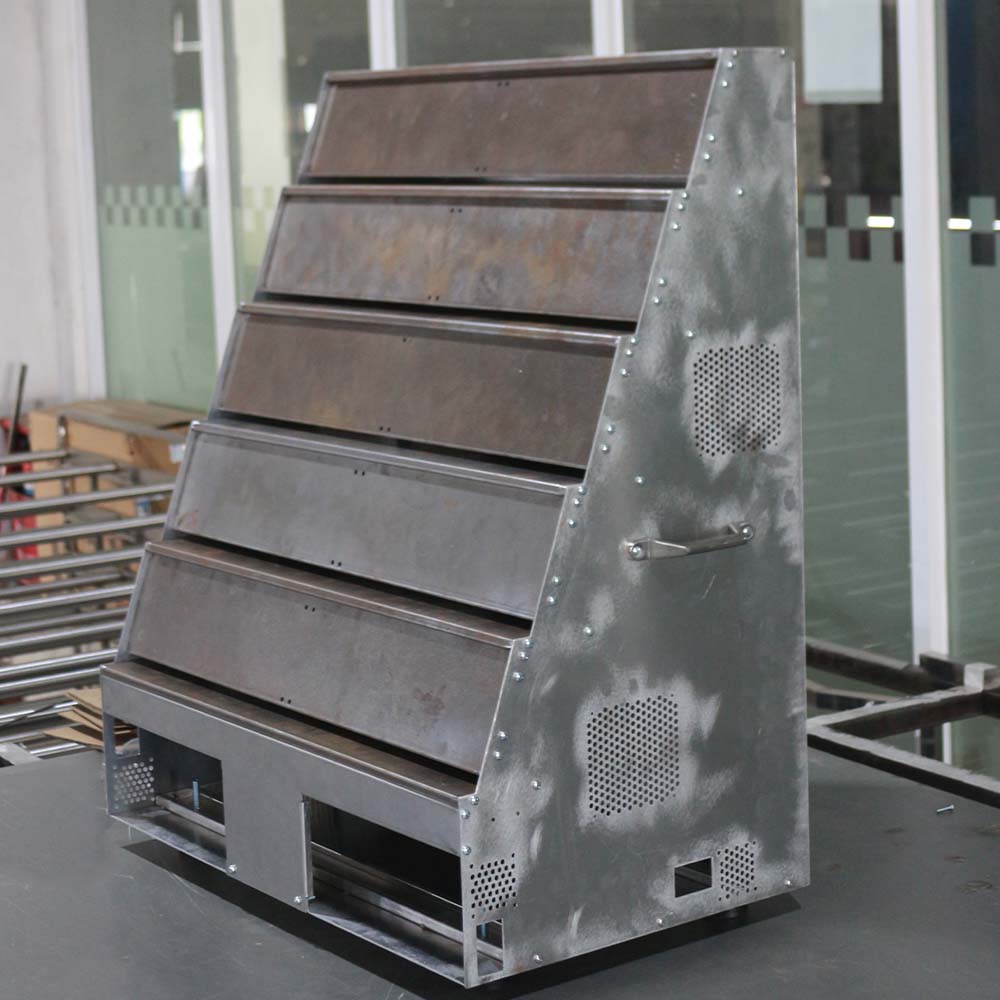
Panels move to press brakes for box-fold construction that adds rigidity without extra bracing. Internal welds are ground flush, keeping exterior seams smooth for coating and branding. Reinforced corners handle shipping and rough field handling.
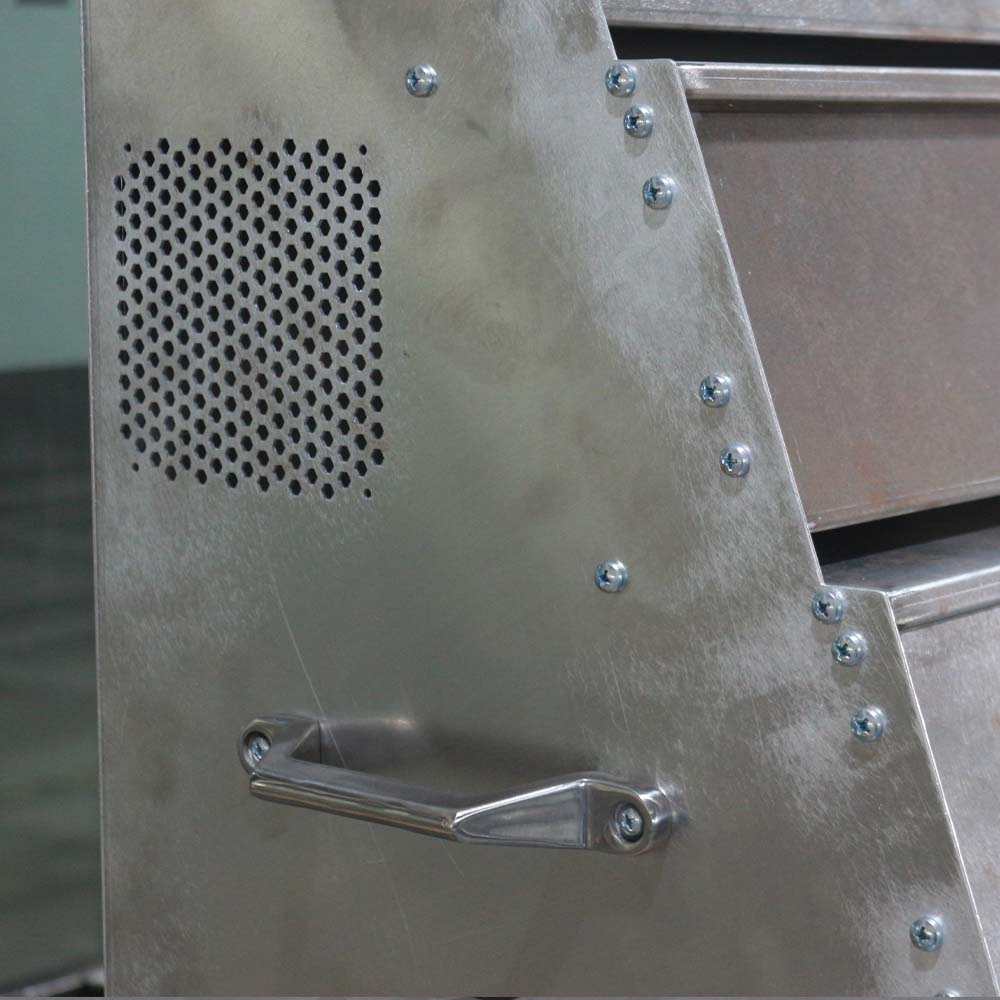
Coating quality is where cheap suppliers cut corners. We run the full industrial cycle:
The finished surface shrugs off fingerprints, cleaning chemicals, rain, and graffiti solvents — and can be re-coated if a panel is ever damaged.
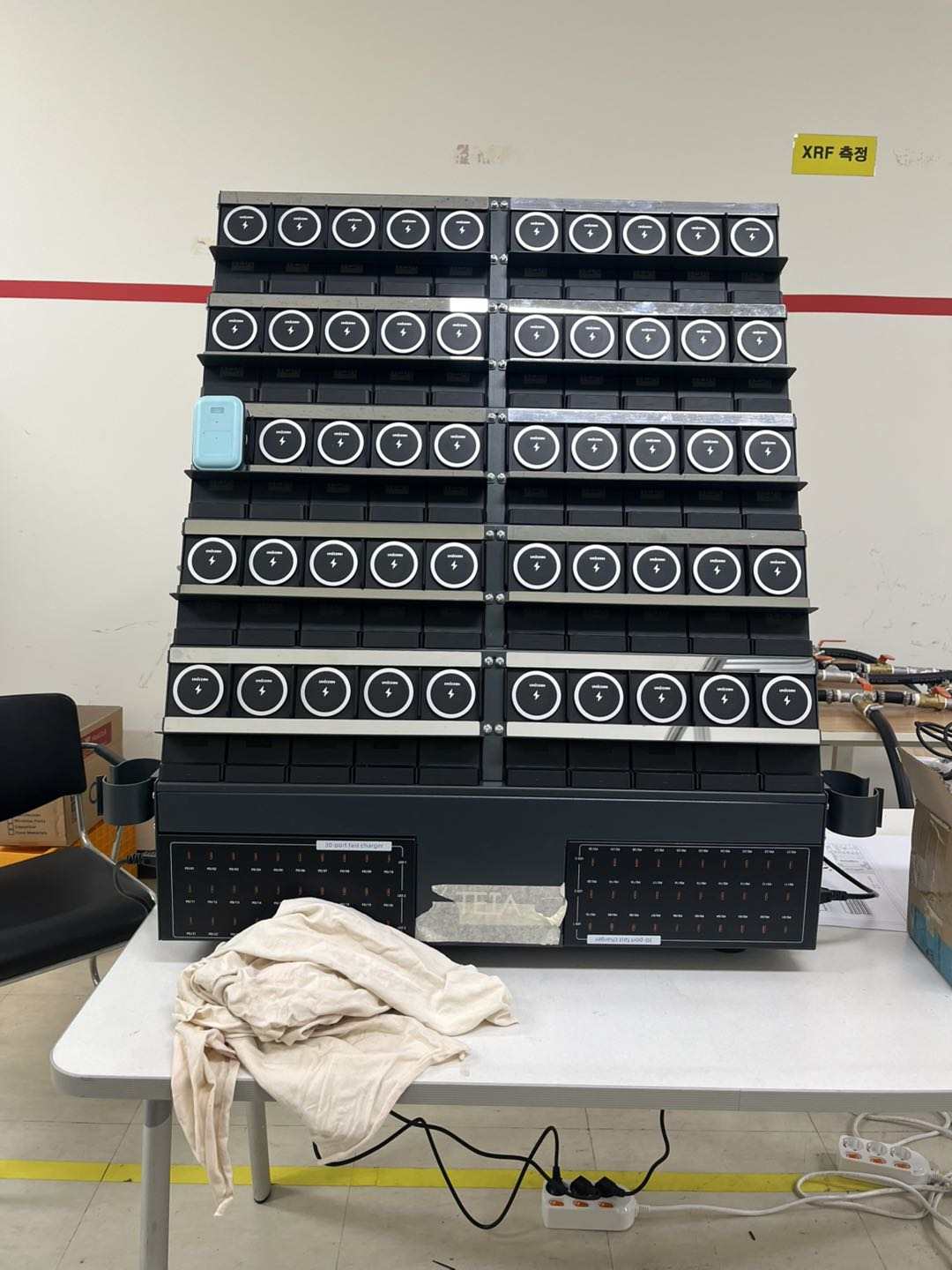
Before shipping, every cabinet undergoes:
With 18 years in sheet metal fabrication for electronic equipment enclosures, our facility combines:
We supply charging station enclosures to power bank operators and device brands across Europe, the Middle East, and Southeast Asia — each program adapted to local safety and fire codes.
Whether you're launching a new power bank rental station, upgrading an existing charging line, or standardizing cabinets across markets, we manufacture precision steel charging cabinet enclosures built to your exact slot layout and heat load.
📩 Send your drawings or device list for a quote within 24 hours. 📦 Approval samples available before mass production. 🏭 Request a video walkthrough of our laser cutting and powder coating lines.