EN
EN

If you're still replacing rusted wire mesh panels every 2–3 seasons or patching up splintered wooden rails that your rams keep breaking through, you already know the math doesn't add up. Every fence failure means escaped sheep, predator losses, vet bills for injured animals, and hours of labour you can't bill back.
The real problem isn't your farm management. It's the material.
Traditional timber fences rot. Welded wire mesh snaps at stress points. Light-gauge tube gates sag and bend within a year. These aren't fencing products — they're recurring liabilities.
That's why professional livestock operations across Australia, New Zealand, and North America are switching to heavy-gauge galvanized steel sheet metal panel fencing — and why a single investment in properly fabricated sheep yard panels typically outlasts three cycles of conventional fencing replacements.
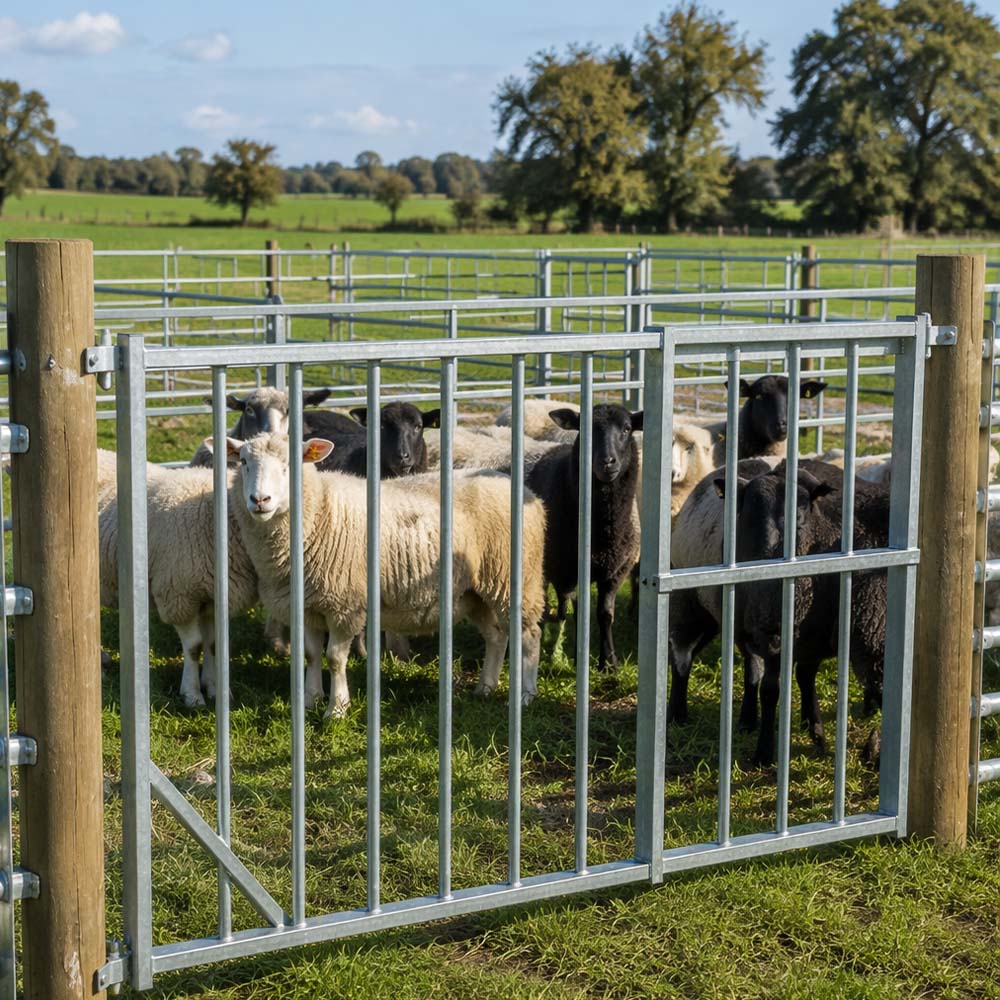
Unlike tubular or wire-based fencing, sheet metal fabrication delivers structural advantages that matter at scale:
| Factor | Traditional Wire/Tube | Sheet Metal Panel Fencing |
|---|---|---|
| Load-bearing strength | Point-load failure at welds | Uniform stress distribution across the full panel face |
| Gap consistency | Wire spacing drifts over time; lambs get stuck | Laser-cut slots are permanent and precise |
| Corrosion resistance | Thin zinc coating burns off at welds | Hot-dip galvanized after fabrication — every edge sealed |
| Assembly speed | Tie wires, staples, tensioning | Bolt-together modular panels — 3 workers, 1 day per pen |
| Animal safety | Sharp wire ends, protruding fasteners | Rolled edges, flush hardware, smooth panel surfaces |
For high-density sheep yards, forcing pens, and lambing pens, the difference between a wire panel and a fabricated steel panel is the difference between constant maintenance and years of hands-off reliability.
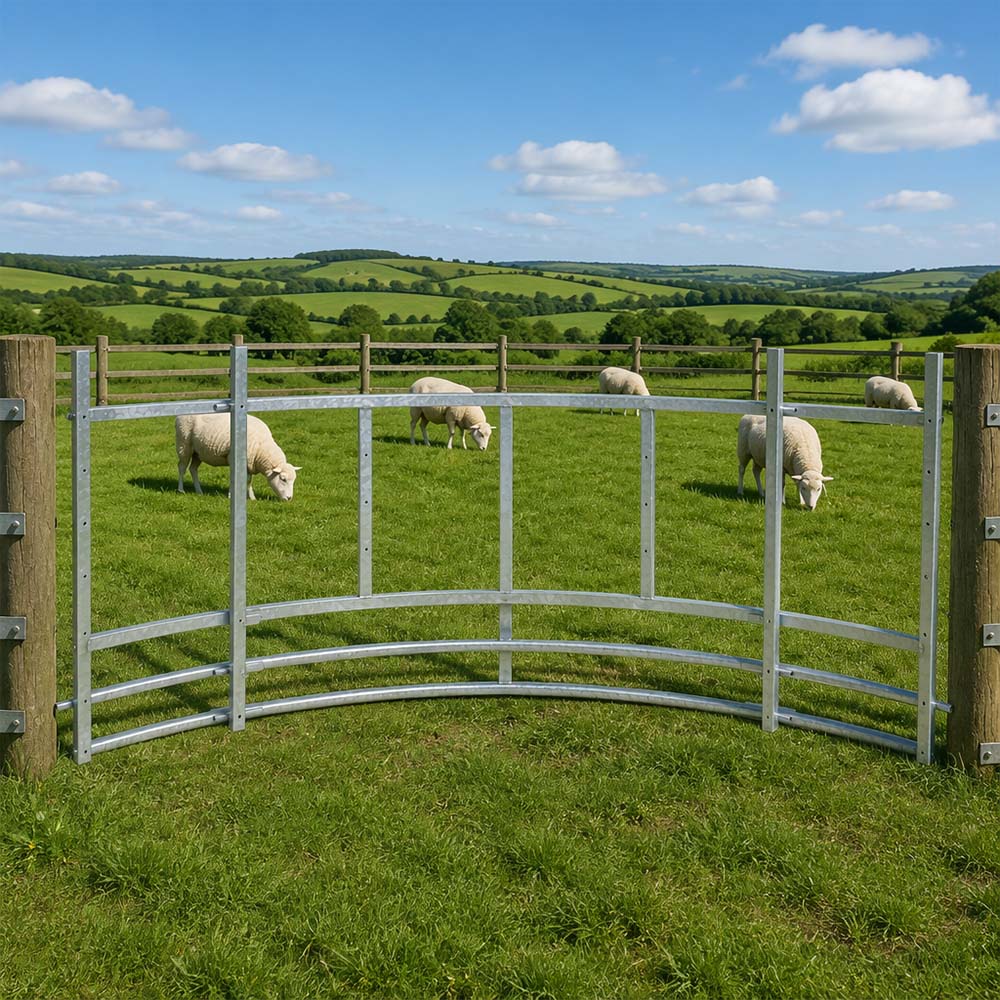
Understanding the fabrication process helps you evaluate suppliers. Here's what a production-grade panel manufacturing workflow looks like:
Every panel starts as a CAD file. Our engineering team optimizes slot patterns for your specific operation — standard sheep yards, forcing races, or multi-purpose cattle-sheep combo yards. Nesting software maximizes material yield from each 2440×1220 mm steel sheet, keeping your per-unit cost predictable.
Industrial fiber lasers cut gate slots, bolt holes, and interlocking tabs in a single pass with ±0.2 mm tolerance. No drilling, no punching — every opening is burr-free. This matters because lambs press against gaps; a rough edge here means vet treatment there.
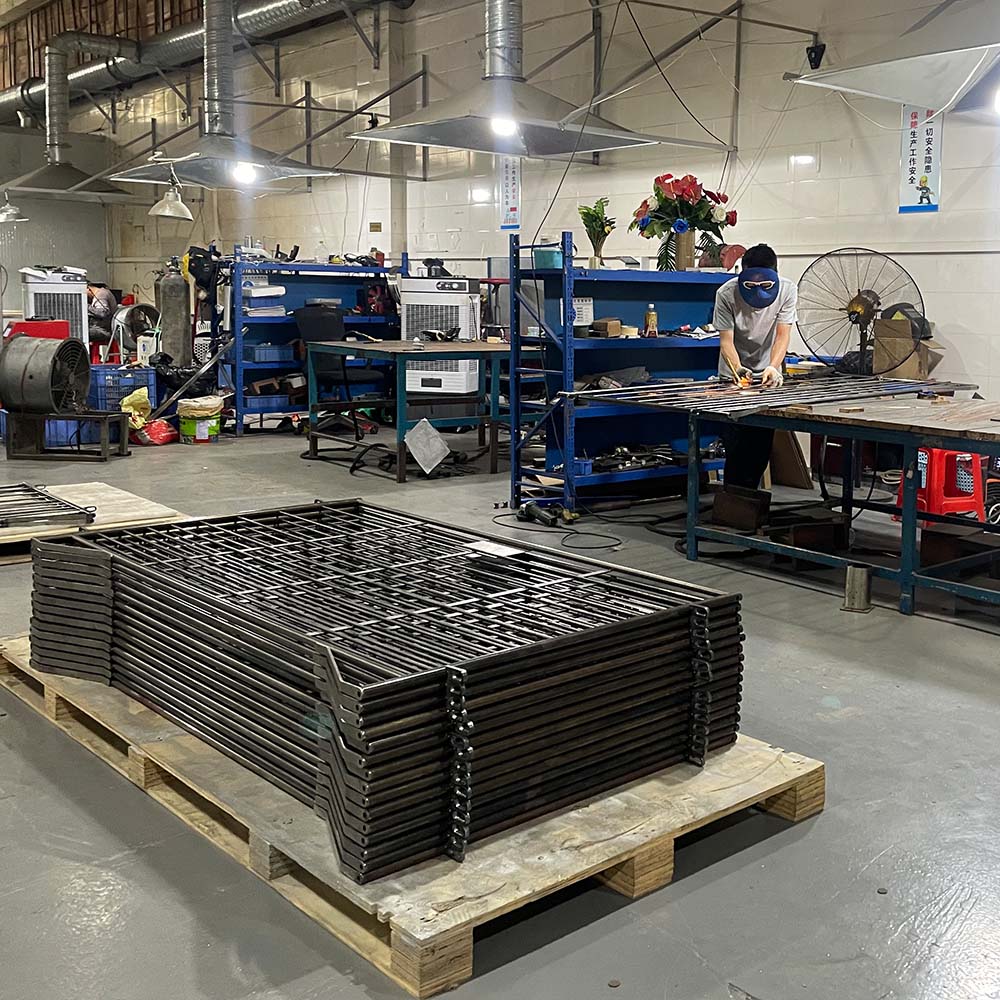
Sheets move to hydraulic press brakes for structural folds — top and bottom flanges, corner returns, and stiffening ribs that turn a flat sheet into a rigid structural panel. Our 600-ton press line handles 2.0–4.0 mm gauge steel across the full 2.4 m width.
This is where most suppliers cut corners. We hot-dip after fabrication — meaning cut edges and weld zones get the same 85+ micron zinc coating as the panel face. The result: a uniform silver-grey finish that withstands 15+ years of rain, urine, and manure exposure without red rust.
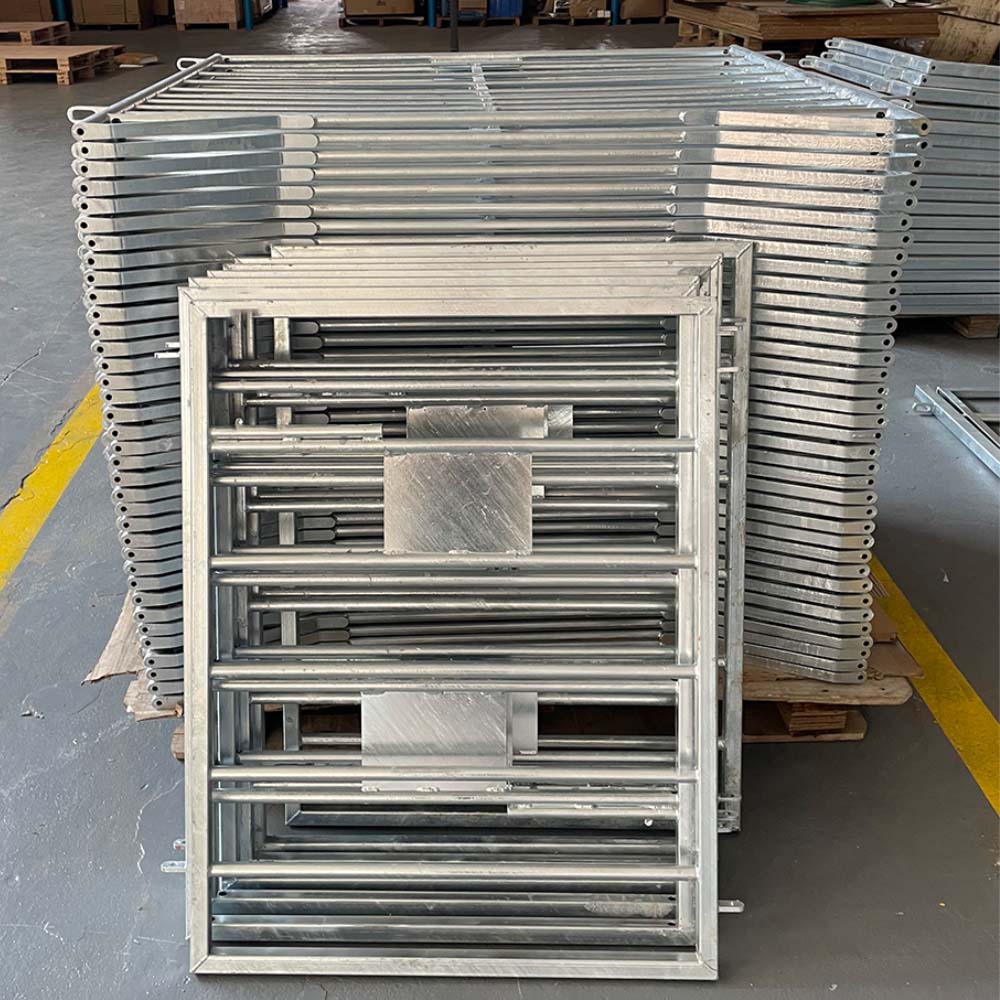
Every batch undergoes weld integrity testing, dimensional spot-checking, and coating thickness measurement before heat-treated timber pallets are built for container loading.
With 18 years in sheet metal fabrication for agricultural equipment, our facility combines:
We've shipped sheep yard systems to farms in Australia, the UK, Ireland, and Canada — each batch adapted to local animal welfare standards and gate configurations.
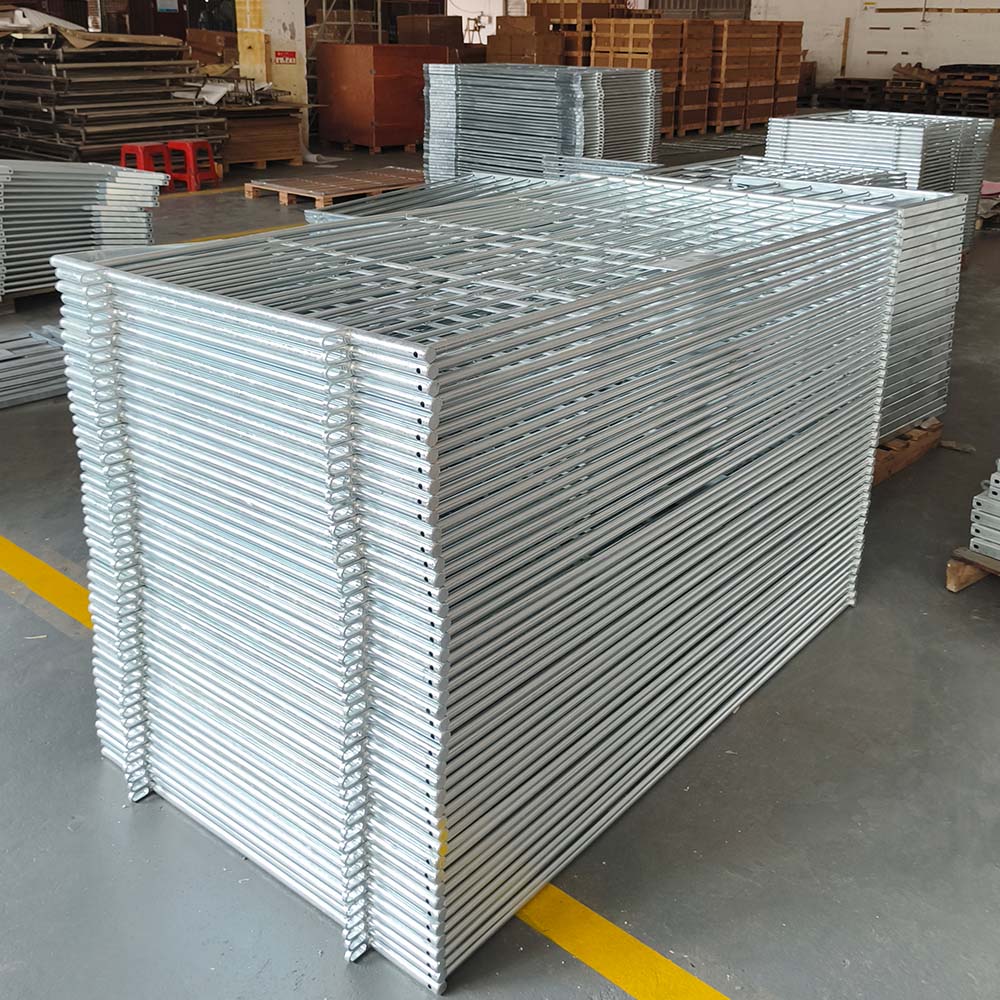
Whether you're replacing worn-out forcing pens, expanding your lambing yard capacity, or launching a new livestock equipment brand, we manufacture galvanized steel sheep pen panels that your customers — and your accountant — will appreciate.
📩 Send your panel specifications or CAD drawings to get a quote within 24 hours. 📦 Sample panels available on request.