EN
EN

For sheep and horse operations, hay and feed are the single biggest recurring cost — and most feeders quietly burn through both.
Watch a flock of sheep at a poorly designed feeder: they pull hay out, trample it into the mud, and refuse what's soiled. A full hay rack can lose 20–30% to waste before a single mouthful is eaten. Horses are worse on equipment: they kick, rub, and lean on flimsy feeders, splintering timber mangers and bending thin-gauge metal until it's dangerous — sharp edges and protruding hardware cause injuries you'll pay for twice.
Add corrosion from weather, urine, and fermenting feed, and a cheap feeder isn't a saving — it's a recurring expense with a vet bill attached.
The fix is the same for both species: a galvanized steel feeder, fabricated properly — with species-specific geometry, smooth edges, and a zinc coating that outlives the barn.
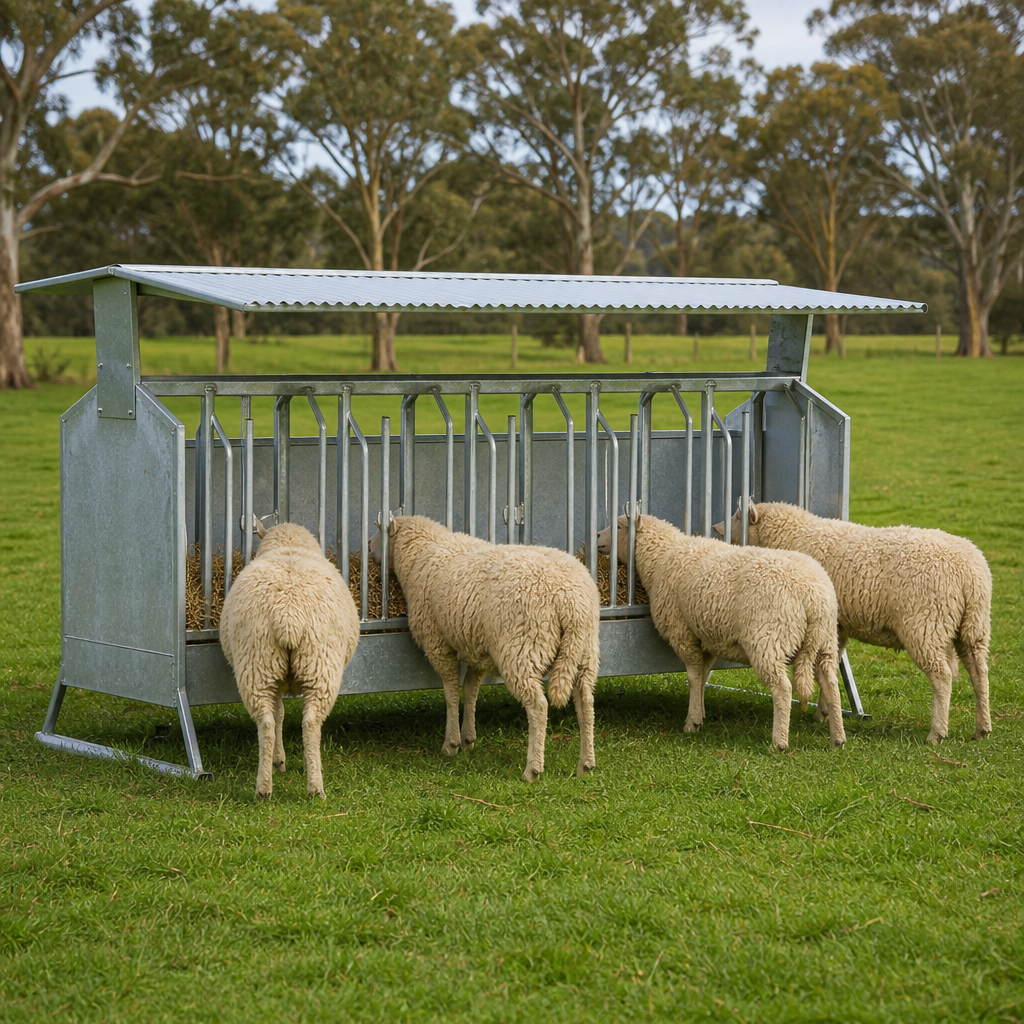
The cover overhang keeps rain and birds off the feed, the sloped trough delivers every last stem, the divider bars separate animals while eating, and the hinged mounting bracket bolts to any fence line, stall wall, or paddock post.
The difference between a feeder that lasts two years and one that lasts fifteen is decided in the sheet metal workshop.
This is where fabrication expertise matters most:
Panels, bar slots, and mounting-plate openings are laser-cut in one pass with ±0.3 mm tolerance. Clean, burr-free edges mean no sharp corners to injure animals — and consistent geometry across your entire batch.
The trough curve, cover overhang, and edge flanges are formed on CNC press brakes. Rounded, rolled edges are a design requirement for horse feeders — a correctly bent panel carries far more load than the same steel left flat, and rolled lips remove every injury point.
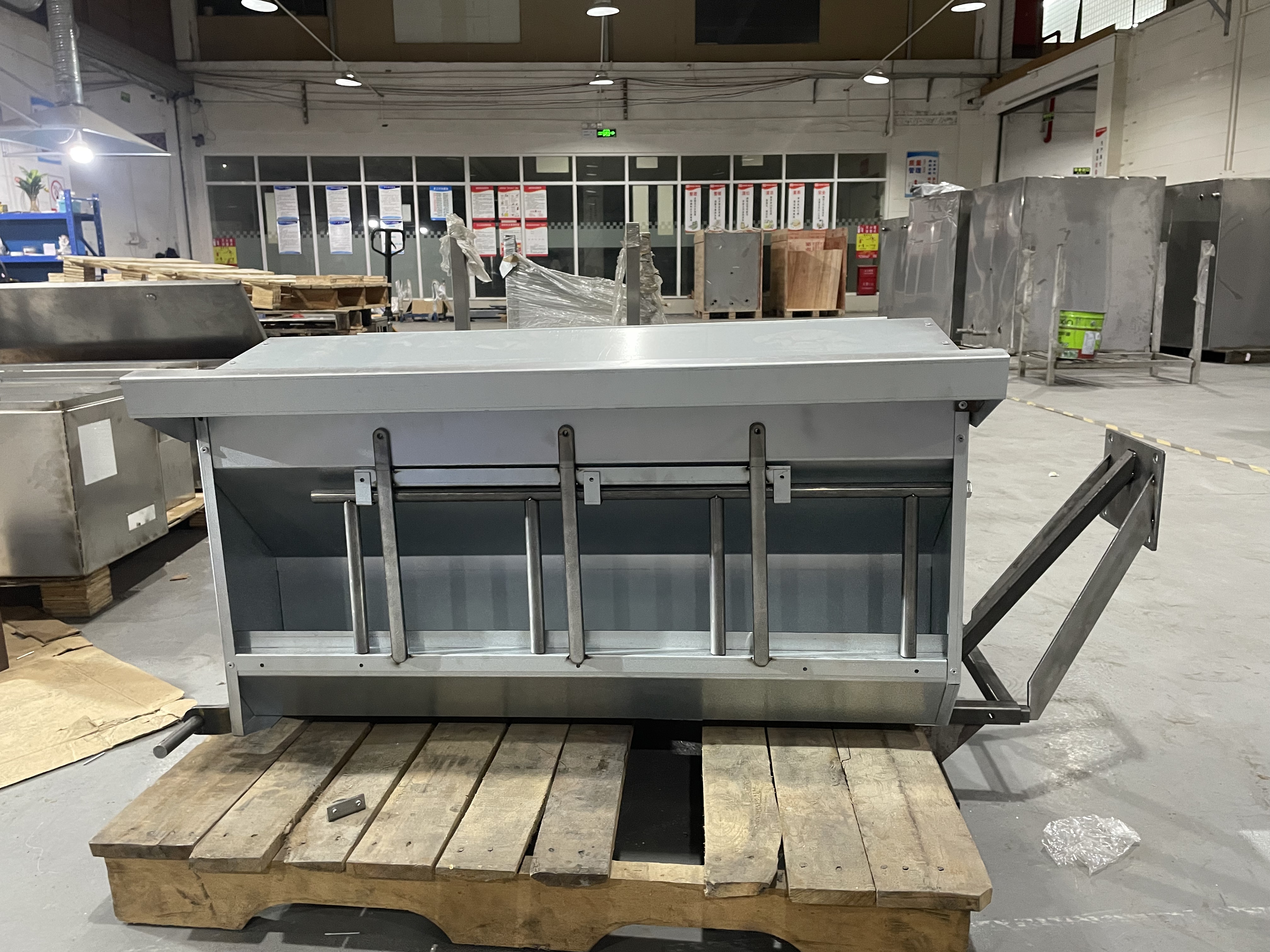
Divider bars, guard rails, and hinge brackets are welded or riveted to the main body with tight seam control. Riveted joints are the practical choice where field repair matters, and every seam is engineered not to trap feed or water.
The critical step: galvanizing happens after fabrication, so cut edges, weld zones, and drilled holes all receive the same full zinc coating as the panel face. This is what stops rust from starting at exactly the spots where cheap feeders fail first — and why the zinc survives years of urine, manure, and weather.
Every unit is checked for bar spacing, trough slope, edge smoothness, hinge action, and mounting-hole alignment before export packing — stacked with edge protection so feeders arrive as straight as they left.
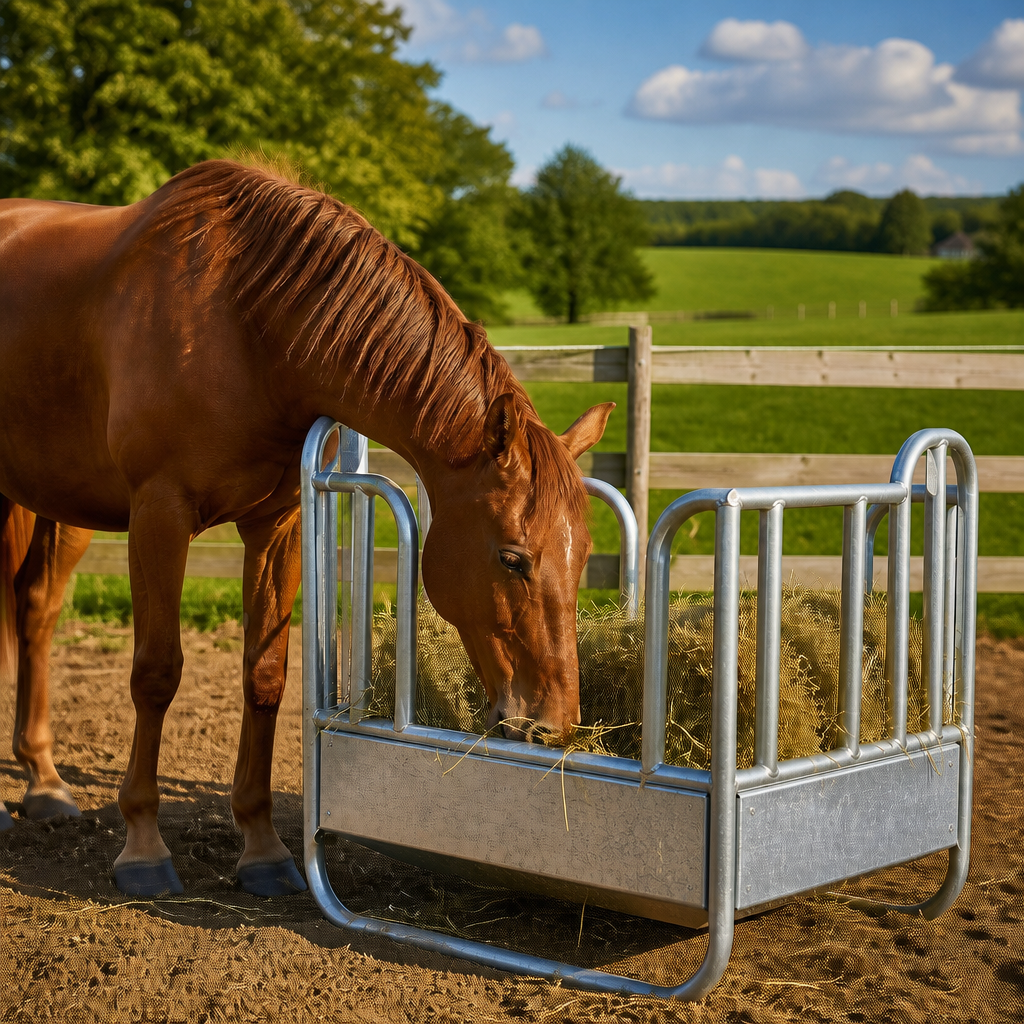
With 18 years in sheet metal fabrication for livestock equipment, we supply sheep feeders, horse hay feeders, and feeding systems to farms, equipment dealers, and OEM brands worldwide:
Whether you're outfitting a new sheep paddock, replacing mangers across a horse yard, or launching your own livestock equipment line, we fabricate custom galvanized steel sheep and horse feeders built to your animals' needs.