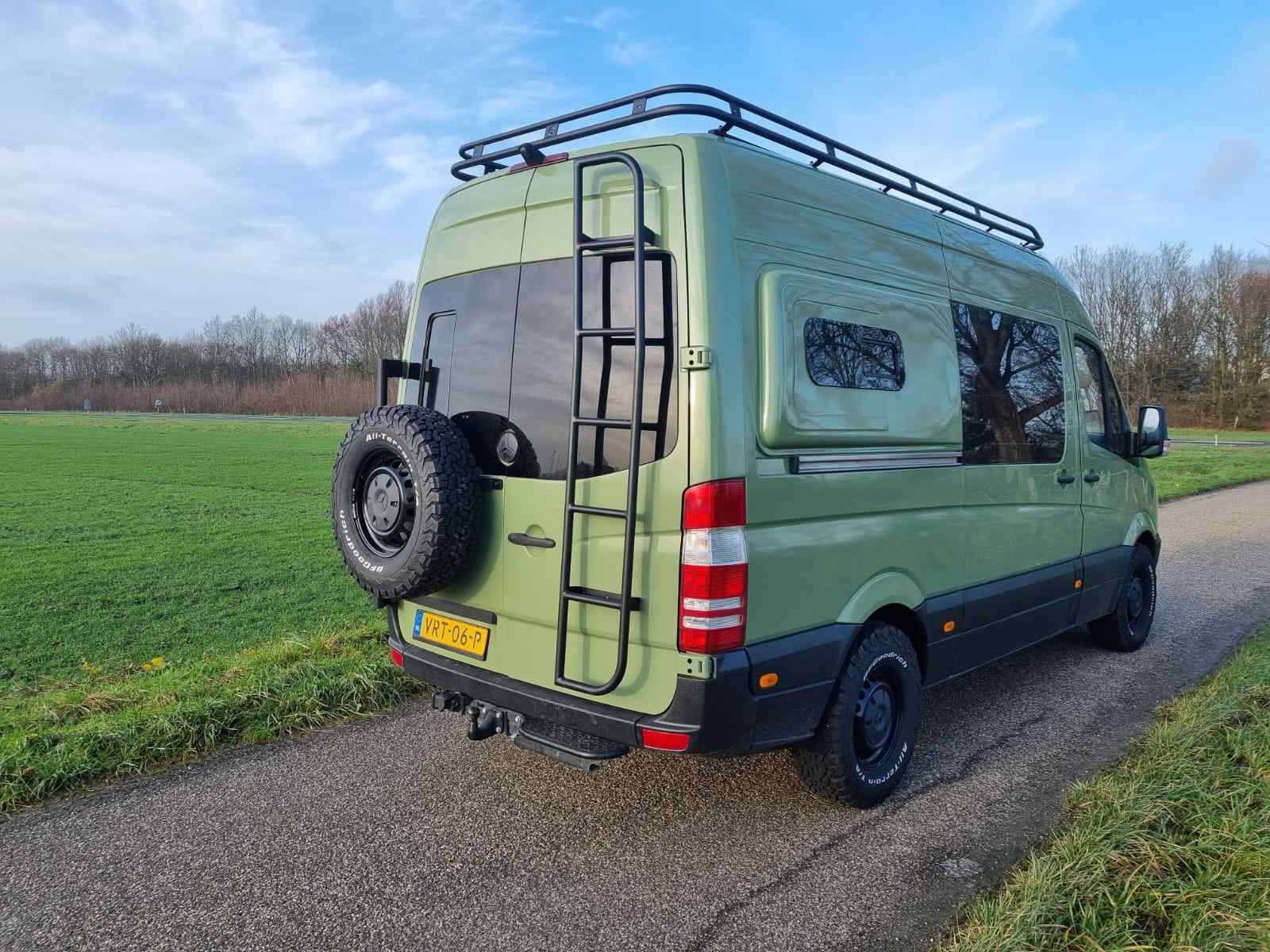
As core load-bearing components for outdoor travel, the sheet metal processing of RV roof racks and stairs must balance strength, lightweight design and compatibility. The key process points are as follows:
-
Material Selection and Cutting
High-strength aluminum alloy or galvanized steel sheet is preferred. Precision nesting is carried out according to RV model parameters, and CNC laser cutting is adopted to ensure that the blanking size error is ≤ 0.1mm and reduce material waste.
-
Forming Processing
The forming of structures such as brackets and steps is completed through CNC bending and stamping processes. One-time forming technology is applied to key stress-bearing parts to avoid welding stress concentration. The radian of the roof rack must match the contour of the RV roof to ensure good fit.
-
Welding and Grinding
TIG welding is used for splicing, with emphasis on reinforcing the welds at joints. After welding, mechanical grinding combined with manual finishing is performed to remove burrs and welding slag, ensuring a flat surface and laying a solid foundation for subsequent processing.
-
Surface Protection
After degreasing and phosphating, electrostatic spraying or anodizing technology is adopted to enhance corrosion and wear resistance, adapting to complex outdoor environments. Colors can be customized according to requirements to match the overall style of the RV.
-
Assembly and Inspection
Accessories such as connectors and anti-slip steps are installed precisely. Load testing and dimension rechecking are conducted to ensure that the components meet the load-bearing requirements, feature easy installation, and comply with the safety driving specifications for RVs.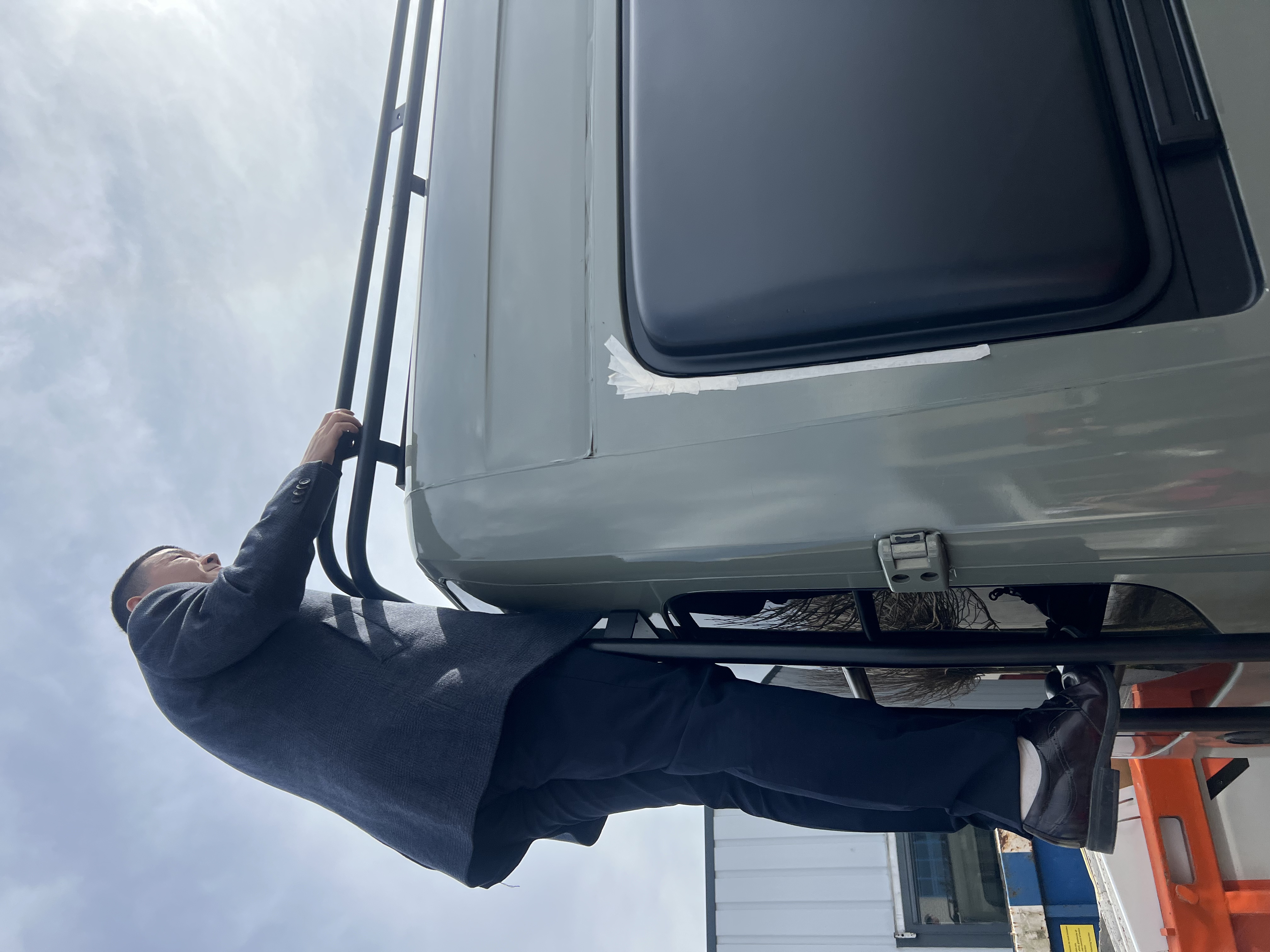
 EN
EN